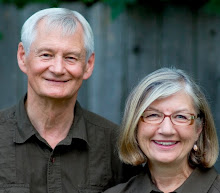
Our 5-week holiday is in wrap-up mode as we look forward to the next semester at Baotou Teachers' College.
17 February 2011
Good Day Vietnam
12 February 2011
Hello Hanoi
Hanoi celebrated its 1000th birthday last year, so we had to check out the center of the world in this city of 6.5 million.
We really enjoyed seeing with city with our friend Elizabeth, who's been living in Hanoi for the last five years teaching at the Diplomatic Academy. She just finished editing a book of Canadian women's literature translated into Vietnamese which will be introduced by the Canadian embassy.
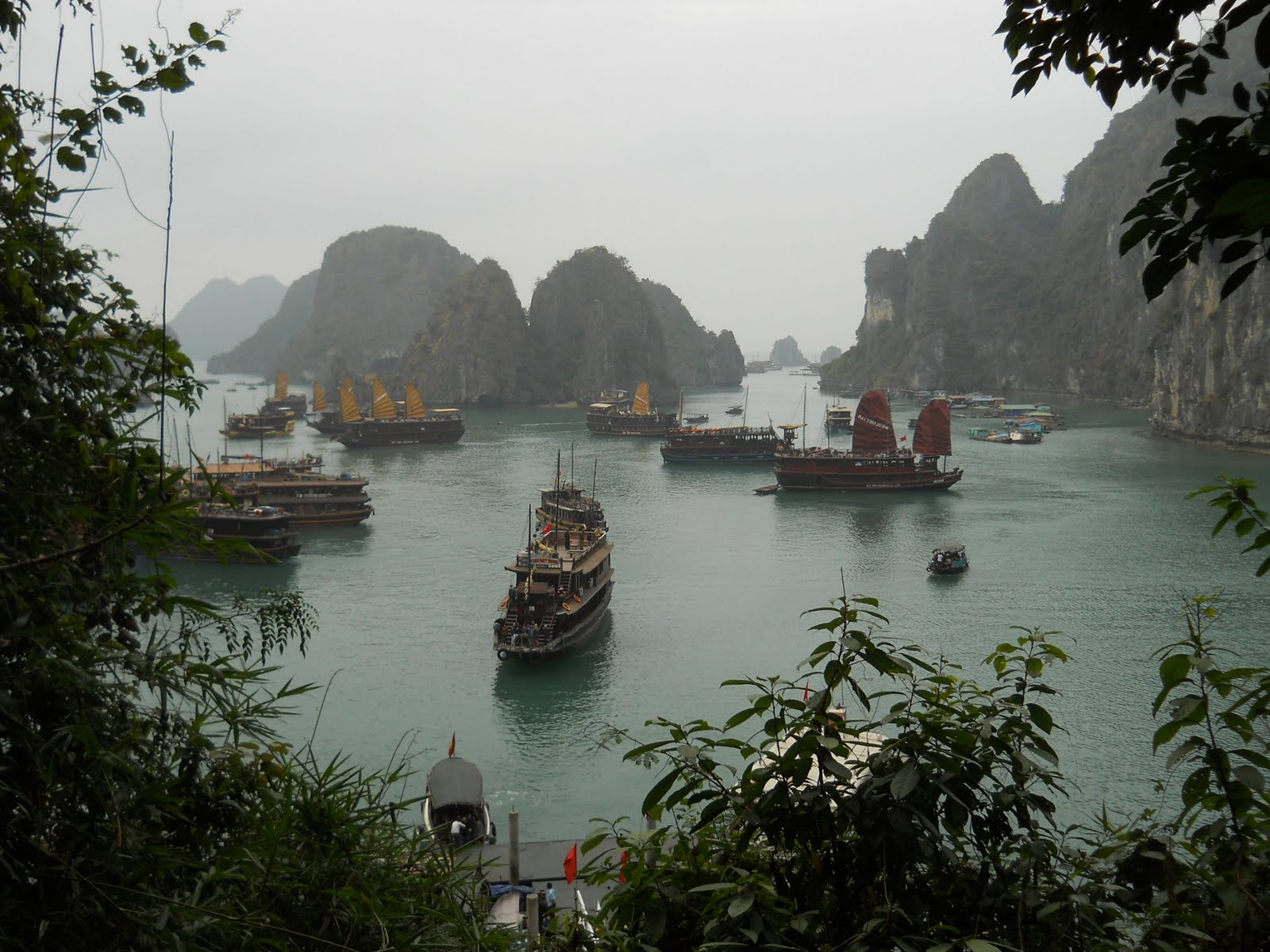
We toured Ha Long Bay which has thousands of limestone karsts and isles in various shapes and sizes.
10 February 2011
New Year in Hong Kong
Hong Kong bills itself as "Asia's World City," and it's easy to see why.
The Chinese New Year fireworks over Victoria Harbour were spectacular with many number 8's in the sky, especially auspicious since in Chinese "8" sounds similar to the word for wealth and is visually similar to the word for happiness.
03 February 2011
Hello from Hong Kong
We arrived in Hong Kong Jan. 26 and made our way to Tao Fong Shan, http://www.tfss.org/. We'd been told it was an affordable church-linked guesthouse, but realized when we got here that it is especially Lutheran.
The center was founded in 1930 by a Scandinavian missionary and today continues to work with inter-religious dialogues and the study of religion. This is Christ Temple, an octagonal structure reminiscent of the two temples leading to the Altar of Heaven in Beijing.
We're staying in this mountain-top guesthouse which comes with a great view, a labyrinth close by, and the Lutheran Theological Seminary up the hill.
Hong Kong is definitely not like our part of China, and there's a lot of talk about one country, two systems. This poster prohibiting spitting and littering, among other things, caught our eye.
We were treated to lunch at the Royal Hong Kong Yacht Club with a marvelous view of Victoria Harbour. The half-size Little Mermaid scupture on the left was a gift from Denmark.
A tram ride up to the Peak.
Greetings from this part of China, as we continue to enjoy our winter holiday.
At the Flower Market we joined thousands who were shopping for new year decorations. The bamboo plants for luck are next to the five-generation fruit plants, auspicious when the entire family gathers to celebrate.
28 January 2011
Xi'an
After Beijing we headed west to Xi'an, an ancient capital of China at the eastern end of the Silk Road and now most famous for its terracotta warriors.
Each statue is unique and larger than life size -- Daniel doesn't quite measure up.
The terracotta sculptures from 210 BC depict the armies of Quin Shi Huang, the first emperor of China. About 8000 warriors are estimated to be here, and we were impressed by how much is yet to be excavated.
Xian's city wall is the oldest and best preserved in China. First construction was 194 BC, although the current city wall was started by the Ming Dynasty in 1370, almost 14 km around and 12 m high. We wobbled around the wall on bikes, admiring the spring festival decorations.
The caption reads "White Glazed Porcelain Pillow with Dark Design of a Beauty" -- beauty not comfort.
Prosperity is a theme for the upcoming Chinese lunar new year, so Starbucks offers up green tea as well as espresso tea lattes.
Longevity is also a big theme in China, especially for the new year Spring Festival celebration, and traditional Chinese calligraphy is a fine art form in Xi'an. It's working for this artist who was eager to explain his one-stroke creation.
23 January 2011
A Wedding
We attended our first wedding in China. One of our teaching colleagues was getting married close to Xi'an, so we were excited to be there. And everyone was very kind to the special foreign wedding guests.
Weddings in China combine elements of the west (white gown, exchange of rings) and east (red for good fortune, paying respect to parents). Here's the first bridal outfit, completed with a sash from fabric that matches their wedding quilt.
The bride arrived at the groom's home with her head covered, harkening back to the traditional custom of a groom not seeing the bride's face until their wedding day. All the lion statues on the procession route had their faces covered in red as well to prevent them from seeing the bride, and of course we drove to the sound of firecrackers (to keep evil spirits away).
The courtyard of the groom's family was transformed to an enormous kitchen where women from the village prepared food for the guests. The coal-fired cauldrons were steaming.
Diane sharing the kang with some of the older relatives; the kang is a family bed heated by an outside fire piped under the platform, and a very cosy place to be.
About two hundred guests were served in a couple of settings. The wedding meal was elaborate, with about twenty different dishes served in a tent put up for the occasion.
Bride and groom make their bows to the guests with with their parents watching on the right. The woman on the left is the hostess who presides over the ceremony, and the symbols on the wall are double happiness representing weddings.
The happy couple circulate among the dinner guests to serve a celebratory drink and receive red envelopes containing money. Congratulations and best wishes to Li Ye and Zhang Huifeng!
17 January 2011
Burr in Beijing
We took a 12 hour train ride from Baotou to Beijing at the start of our winter holiday to find the crowds light but the weather chilly.
Daniel even took a stroll on the now frozen Kunming Lake that occupies three-quarters of the park.
After watching the sunrise flag ceremony at Tiananmen Square we filed by Chairman Mao's mausoleum (where he's been on view since 1976) and spent the day in the Forbidden City, accompanied by one of our students, Xue Jiao (Nicole).
Forbidden City detail, the largest and best-preserved cluster of ancient buildings in Beijing and home to the Ming and the Qing emperors.
The Summer Palace, a short trip on the new and efficient underground, is full of palace temples, gardens, pavilions, lakes and corridors.Daniel even took a stroll on the now frozen Kunming Lake that occupies three-quarters of the park.

Climbing the steps to the Temple of Heaven we wrapped up our days in the capitol after enjoying the Peking acrobats and sampling the Peking duck.
Subscribe to:
Posts (Atom)