12 May 2011
Wudang Lamasery
We recently visited the Wudang Lamasery, established in 1749 and on the pilgrim route from Tibet to Outer Mongolia.
07 May 2011
Visitor
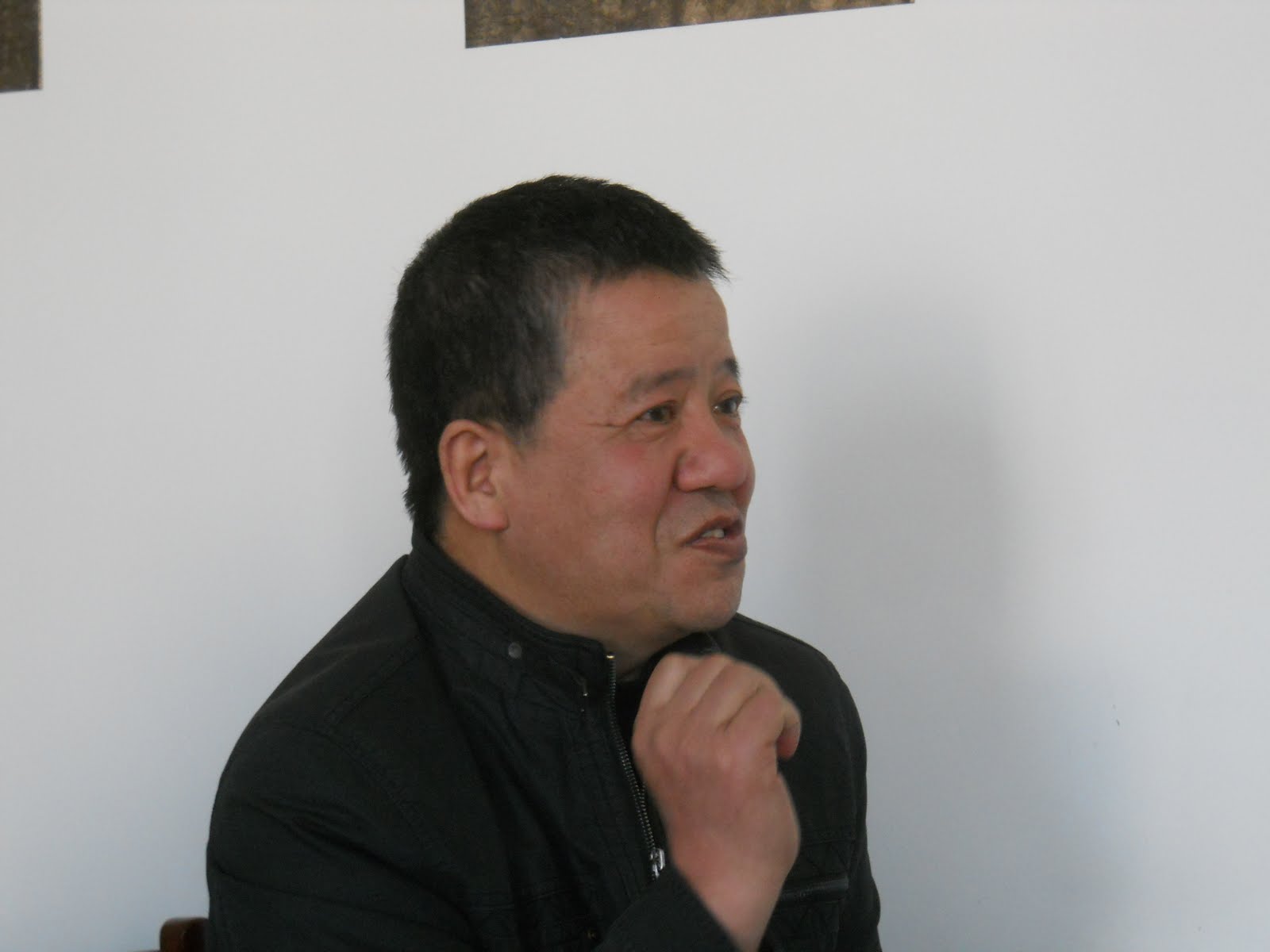
Franklin Ishida from the Lutheran church sponsoring agency came to Baotou -- our very first visitor.
He impressed Diane's students with his Japanese, his insights on being a Japanese American, and his explanation of the role of the church in China and the world.
We toured the Red Revolutionary Museum which houses a hundred statues in all sizes of Chairman Mao, a large display of his little red book, and learned of the 3 wheels of revolutionary success -- a bicycle, a sewing machine, and a watch.
23 April 2011
Birthday Time
Diane recently celebrated her birthday and got as much mileage out of it as she could.
Since we had a faculty development session that day, we took a break and had birthday cake. Birthdays are fairly new celebrations here, since the traditional way is everyone turns a year older when the lunar new year arrives.
Diane and Jenny, a teaching colleague, then celebrated together. In China the birthday cake is eaten before the meal. Life is too short to miss dessert, right?
Jenny turned 55, the age of mandatory retirement for women. Dinner was in her husband's show room; he designed the table and chairs in his picture and is on the left in the red shirt. Their son and niece are next to Jenny.
The birthday women finished the meal with the traditional bowl of noodles with egg; the egg symbolizes a year without problems and the noodles are for long life. So we're looking forward to a great year.
We started with a celebratory lunch at a new restaurant called Warm Coastal (whatever that means), with Diane wearing her birthday present from Daniel.
16 April 2011
Jining and Hohhot
We recently took a long-weekend trip to Jining, a city where two of our Amity colleagues teach, and Hohhot, the capitol of Inner Mongolia.
Visitors to Jining must see Tiger Mountain, where the tigers sport gold-painted teeth and nails.
Since our Amity colleagues are British, we gave their students a different accent experience.
School officials welcomed us at a local Mongolian hot pot restaurant. Rolls of thinly sliced mutton and an assortment of tofu and vegetables are cooked in individual hot pots, and goblets of yogurt complete the banquet.
Daniel strikes a pose in front of a Revolutionary statue.
Pineapples from the south of China are pealed with delicate designs.
The Museum of Inner Mongolia in Hohhot had a wonderful exhibit by a Chinese American painter, Li Zujian.
07 April 2011
Tomb-Sweeping
For the past 2500 years China has celebrated Qingming, or Tomb-Sweeping Day, a time to honor ancestors and ensure their spirits have everything they need in the afterlife.
Spirit money is sold in the market, along with gold colored paper cars, houses, coins, and even clothing.
26 March 2011
Bible School
The Baotou Bible School admitted its first class two years ago to train church workers in theology and leadership.
The school is attached to one of the Christian churches but supported by all 100 churches and church meeting points in the district. This building houses the classrooms and dormitories, and there's also a cafeteria on campus.
Our friend Ruth shows Daniel the library. To attend, one must be a Christian for five years, have a letter of support from your pastor, and pass an admission test.
A hundred students attend this two year program. Ranging in age from 18 to 71, about 80% are women.
Ruth shows us her bed in the 10 person dormitory room. Married with a 12 year old son, she stays here during the week and goes home on the weekend.
22 March 2011
No Longer Notice
After 8 months in China, we no longer notice some things that used to surprise us.
Every day we see men and children urinating in public. Diapers are rare, so parents toilet their toddlers on the street. Apparently back in the '50s this was such a problem that the government had a "public nuisance" campaign. But no longer.
This is our bedroom window ledge after a couple of days, and we have yet to see the real sand storms. Silt and soot are everywhere and in everything. Sigh.
We learned these are sidewalks for the blind. Somehow there's a bit of a gap between the idea and the implementation.
When you go to China Post (both a post office and a bank) to mail a package, you're given a sheet of plastic plus a needle thread to make your own mailer.
Walking backwards is popular in China, and you often see older people taking a backward stroll. It's supposed to improve balance and cognition. Why not give it a try -- millions can't be wrong.
09 March 2011
Walk in the Park
Baotou has a surprising number of parks, so we try to get out a couple times a week, dust the chalk off our clothes, and enjoy a stroll.
The three wise monkeys (see, speak, and hear no evil) are here with their do-no-evil companion. 28 February 2011
Chinese laundry
Now that our travels are over for awhile, we're back to the everyday stuff, including the piles of laundry that awaited us. Since washing clothes is a bit different in Baotou, we thought we'd highlight this domestic task.
We start by wheeling the washing machine, a new model that is popular here, into the bathroom.
Fill the wash tub on the left with with water from the shower head, add soap, and set the timer; then transfer contents to the right tub to spin, refill the wash tub for the rinse cycle, and repeat.
The little machine can become quite active during the spin cycle, so Daniel stands at the ready. He's head laundry person.
Hanging sheets is his specialty

while Diane assists with the lower items. It works rather well and by next day everything is dry. We haven't seen any clothes driers here, and most folks either hang them in their apartment as we do, or have a pole and hang them out the window. Some of our friends insist on ironing, but we've passed on that one.
Subscribe to:
Posts (Atom)